Cooshie Doo
May 2nd 2026
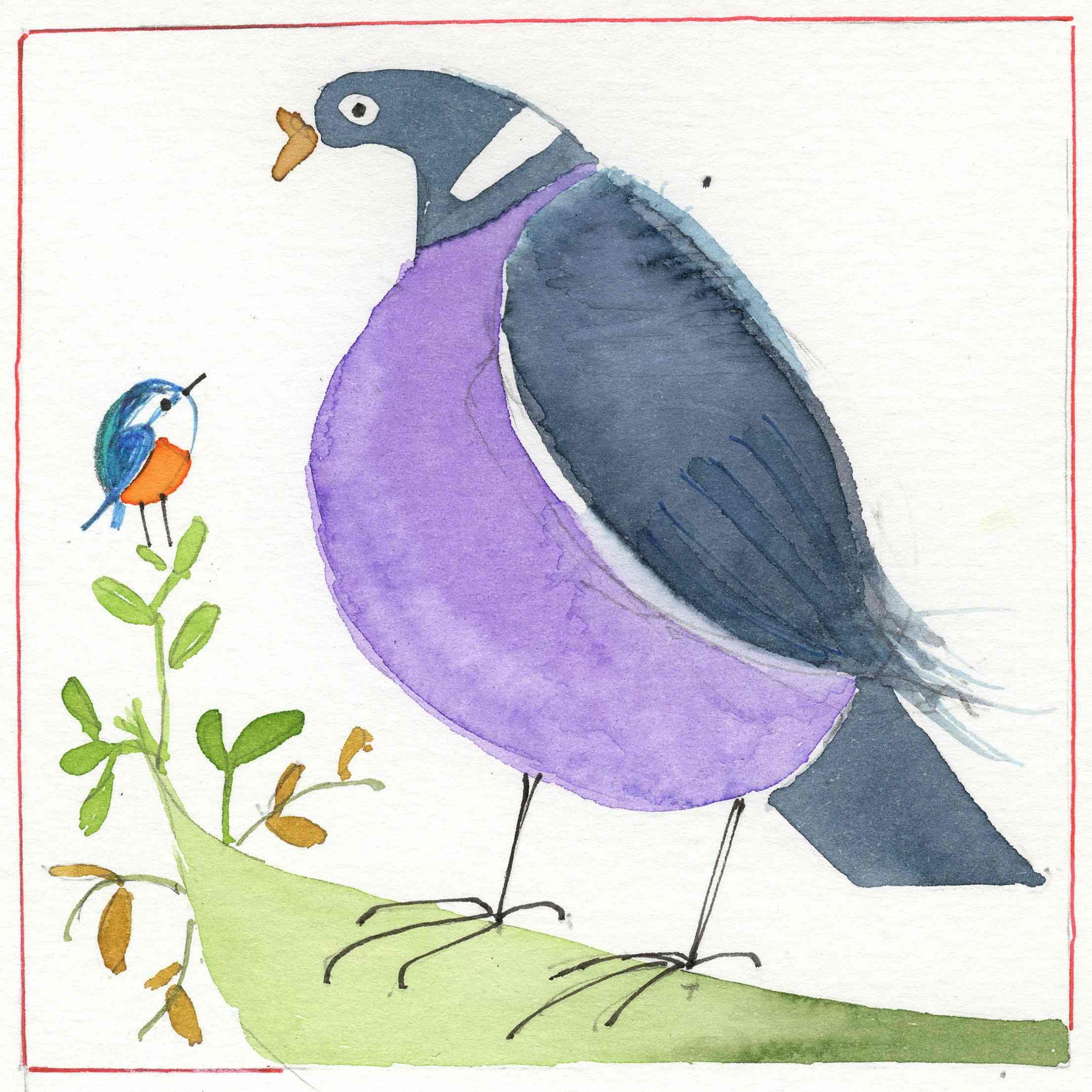
The Dictionaries of the Scots Language (DSL) have plenty to say about cooshie doo, one of several terms for “the ring-dove or wood-pigeon”.
DSL’s earliest citation comes from John D. Carrick’s Laird of Logan (1835): “Up the stair we scrambled like twa cats after a cushey-dou or a mealy mouse”. A mealy mouse is a “mouse which lives in a place where meal is stored or ground”.
In 1887, R.M. Calder’s Minstrelsey of the Merse mentioned, “the young cusha doo that had ventured Oot the nest afore it could flee”. This spelling makes it easier to see the term’s connection to cushat.
A piece in the Scotsman in December 1907 claimed that these birds make for good eating: “I may add that the pee sweep or green plover is in my humble opinion, fine eating, but it has no chance with a cushie doo neither in taste or size”.
However, cooshie doos are better known for their association with romance and affection. S. R. Crockett’s Men of the Moss Hags (1895) mentions, “a voice that was as soft as that of a cushie dove”. Meanwhile, in Alexander Wardrop’s Johnnie Mathison’s Courtship and Marriage (1881) the term appears as a pet name: “O’ Kirsty, jist say that you’ll be mine, my bonnie hen, my darlin’ lamb, my ain wee cushie doo!”.
J.L. Waugh’s Cute McCheyne (1917) provides a far less romantic example: “I wad judge she’s past the cooin’, cushie-doo stage, an’ will sensibly consider this chance o’ a guid doon-settin”. How charming.
Dictionaries of the Scots Language would like to thank Bob Dewar for illustrating our Scots Word of the Week feature.