Mollicate
September 16th 2026
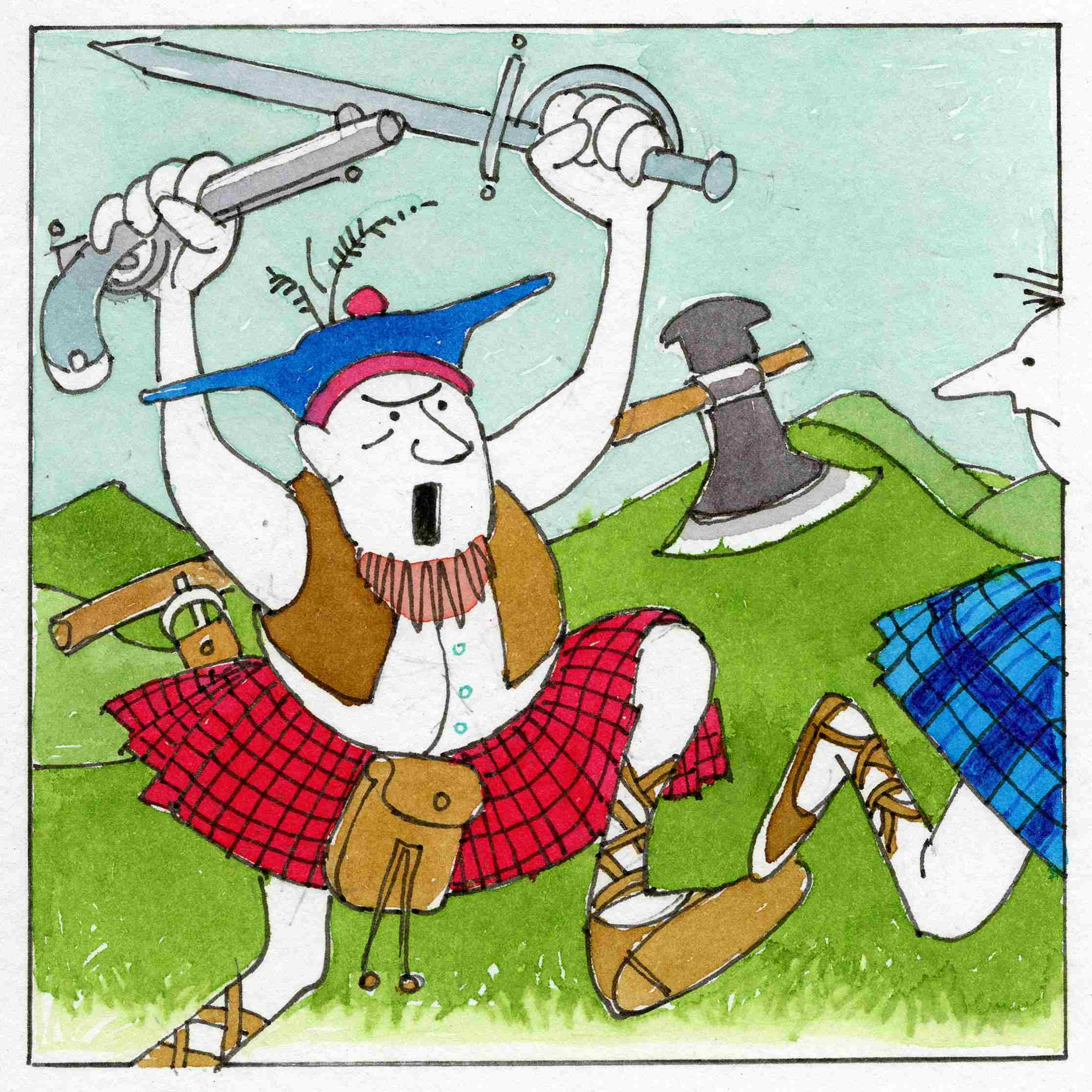
The Dictionaries of the Scots Language (DSL) tell us that this term means “to beat up, batter”.
The word’s origin is unclear, though intriguingly a correspondent in Edinburgh told DSL the following in 1992: “I always thought this was Irish — my Irish Grannie was always going to mollicate me!”
Michael Munro suggests in The Patter (1985) that “molocate [is] used mainly by children” and offers the following example: “Ah’m gauny molocate you!” A similar example is given by Douglas Lipton in New Writing Scotland 8 (1990): “Aye, an’ come yin step nearer / an’ Ah’ll molecate ye”.
In April 1999, we find a more foreboding use in The Edinburgh Evening News: “Should her boyfriend, ‘the Big Yin’, arrive unexpectedly and offer to mollocate, waller or stiffen the would-be Lothario … then violence is probably imminent”.
It can be hard to get a sense of just how serious these threats are. Louise Welsh captures this uncertainty in The Bullet Trick (2007): “‘Bill will molicate him if he has.’ I laughed but Bill’s nod of agreement was serious. ‘He’s treading on thin ice as it is. He knows the score’”.
Still, many examples do appear quite light-hearted. In October 2009, Scotland on Sunday noted: “He was guilty of an outrageous miss that must have made his manager want to molicate him”. Then, in Anne Donovan’s Matilda in Scots (2019) we are told whilst Bruce is eating the chocolate cake that Trunchball has, “taen a pure riddy. She’s gonnae mollocate him if he wins”.
Dictionaries of the Scots Language would like to thank Bob Dewar for illustrating our Scots Word of the Week feature.