Sneck
November 28th 2026
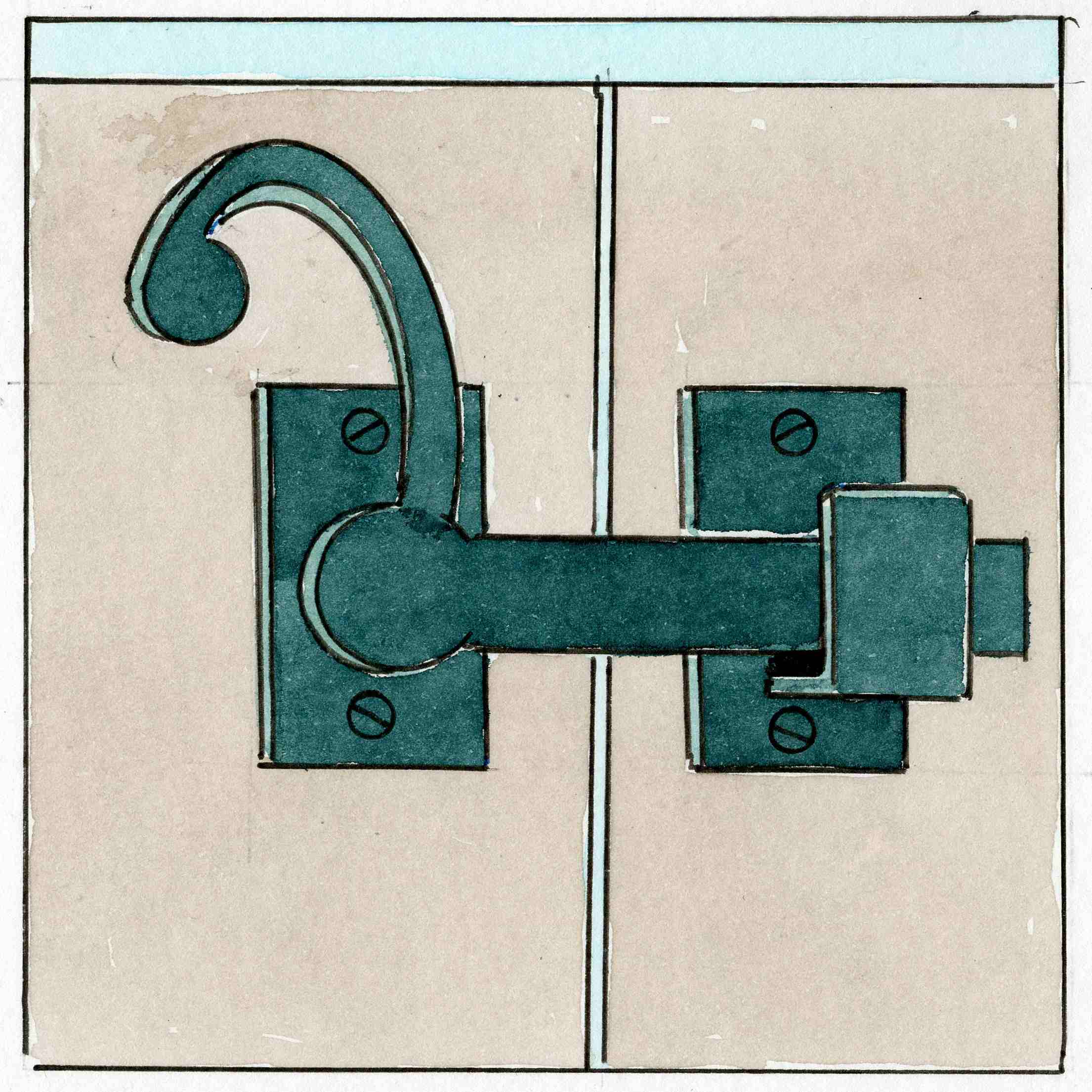
As the Dictionaries of the Scots Language (DSL) remind us, a sneck is, “a latch, a catch, a lever or small bolt which moves the catch of a door”. Examples of this common Scots term date back to the fifteenth century.
Sir Walter Scott’s Saint Ronan’s Well (1824) provides an early example of leaving a door on the sneck: “I’se warrant it a twa-handed ghaist, and the door left on the sneck”. This means leaving it latched but unlocked.
Of course, doing this may invite visitors, as in Robert Louis Stevenson’s Catriona (1893): “The door was on the sneck that day, and me and my faither gaed straucht in”.
How we treat visitors underlies Gordon M. Hay’s translation of Luke 11:7 in The Doric New Testament (2012): “An he cries oot tae ye, ‘Awa an nae buther ma, e sneck’s on e door for e nicht, wir bairns an hiz are in wir beds an A’m nae gyan tae rise an gie ye fit ye’re seekin’”.
This is a far cry from the generosity shown to neighbours in Ian MacDougall’s Voices from Work and Home (2000): “Ye could go in the mornin’ and get a couple o’ rabbits or a brace o’ troot hingin’ on the sneck o’ the door. And if it wis some o’ the things they [poachers] didnae want the polis tae know aboot, it wis put in the bucket at the front o’ the door – and ye discovered a pheasant or somethin’ else, tae keep the family goin’”.
Dictionaries of the Scots Language would like to thank Bob Dewar for illustrating our Scots Word of the Week feature.