Connached
June 13th 2026
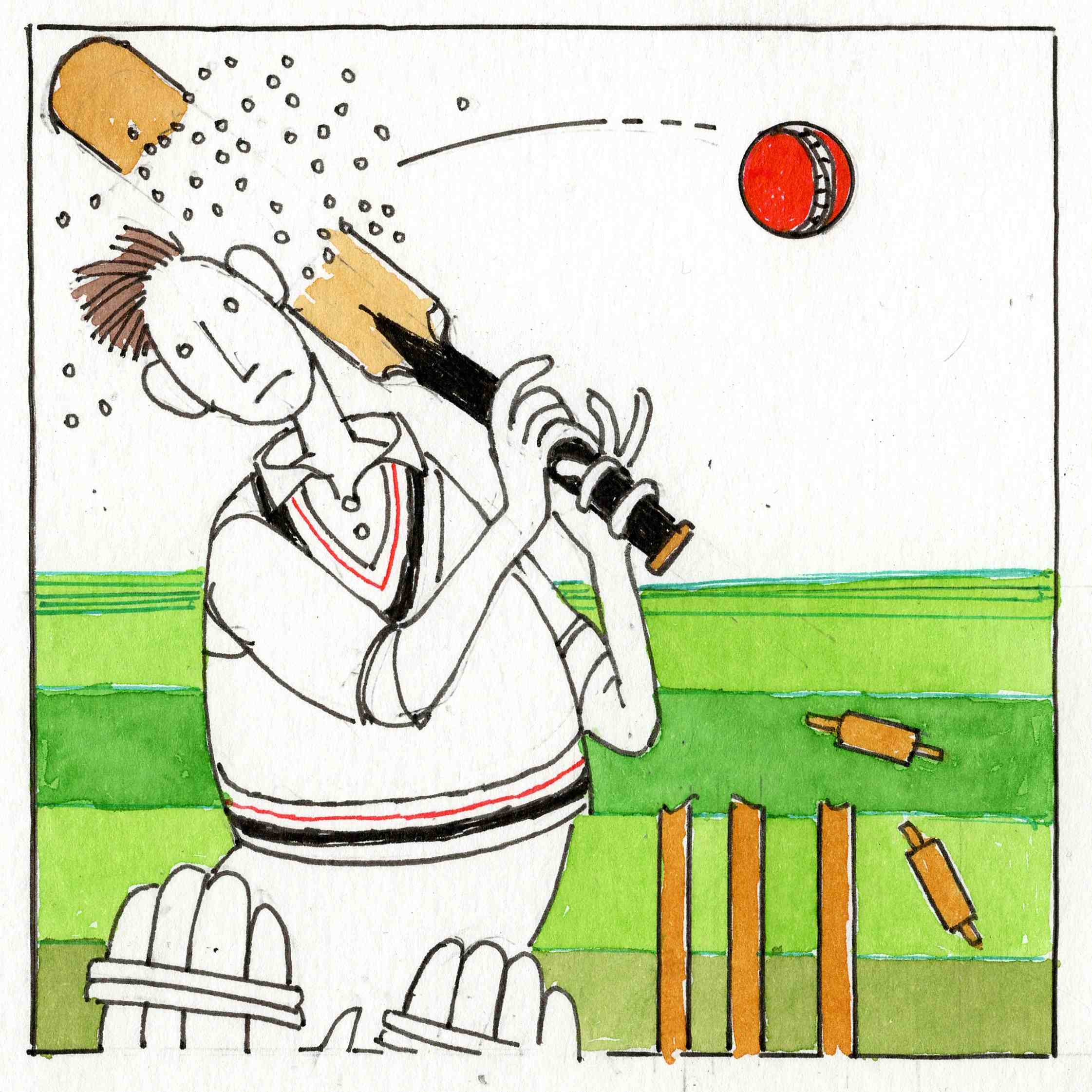
The Dictionaries of the Scots Language (DSL) tell us that to connach is, “to spoil, destroy”. The term seems to be strongly linked to the North East, as the region supplies many of DSL’s citations.
This sense appears to have developed in the twentieth century, with the earliest example uncovered so far coming from the Elgin Courant and Morayshire Advertiser in June 1901. The paper reported on a rather eventful cricket match where, “as the game was just finishing, the bat … became ‘connached’”. We’re told the remains, “were taken for future fuel to make Quaker oats’ porridge”.
Rather than physical destruction we get a sense of spoiled expectations in James Lorimer’s Red Sergeant (1931): “There came an interruption that connached our plan”. Donald Gordon provides a similar example in The Low Road Hame (1987): “An fit aboot me? Fegs, I wis fair connach’t Me wi ma bad legs!”.
In Sheena Blackhall’s Minnie, published in Lallans (2000), the term is applied to spoiling a child: “An as dotin faithers will, he couldna refuse her, clean connached an pettit an spylt as she wis bi him in aathing”.
Unfortunately, a more recent example from the Press and Journal in February 2020 is less upbeat, covering the impact of senseless vandalism on a local community space: “I felt hairt sorra for the enterprisin Inverurie Men’s Shed haein tae meeve efter louts connach’t aa their eident darg [diligent work], hingin baskets teem’t [emptied] oot, plants trumpit on an warst o aa, the polytunnel rippit tae crockaneeshin [fragments]”.
Dictionaries of the Scots Language would like to thank Bob Dewar for illustrating our Scots Word of the Week feature.