Grumphie
August 16th 2025
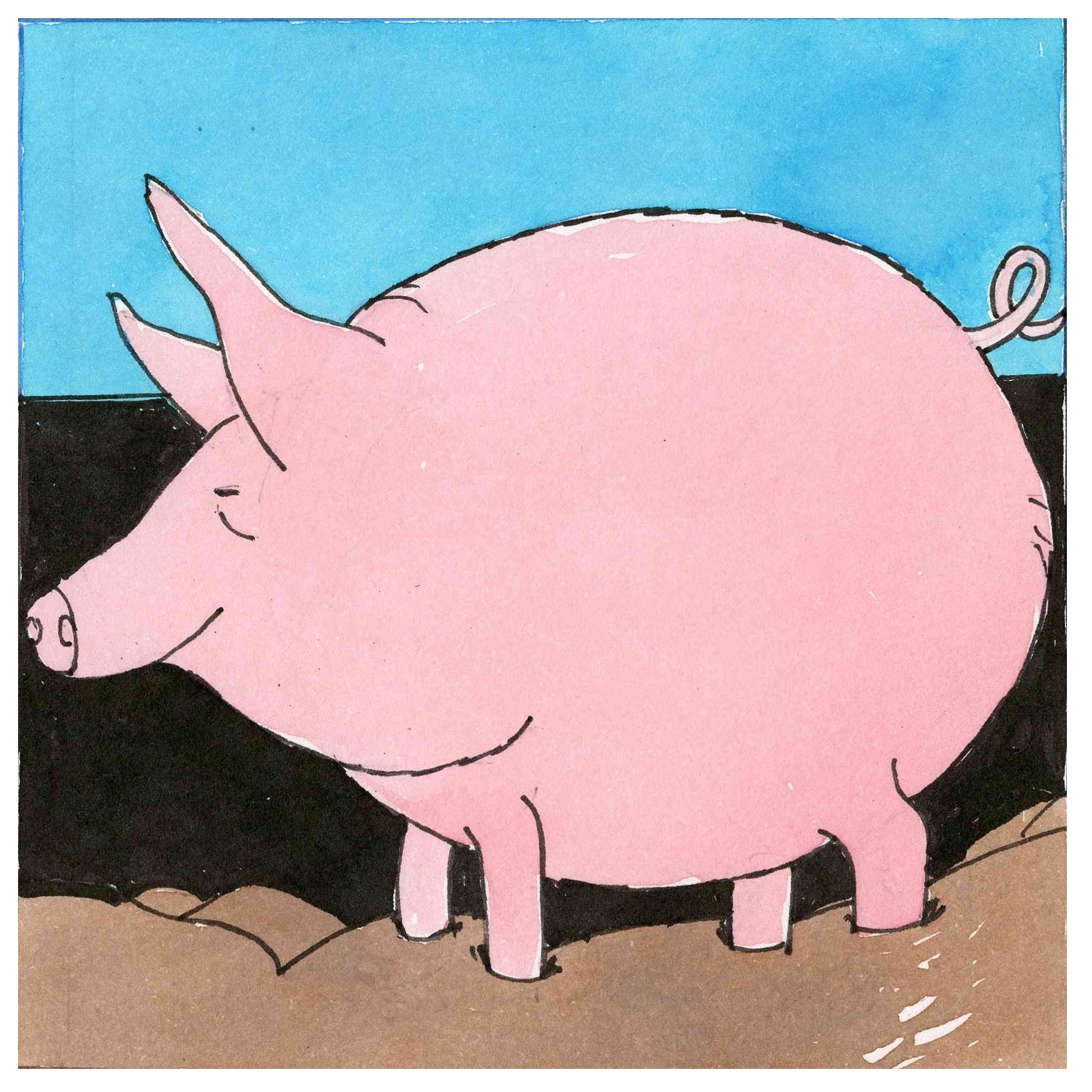
According to the Dictionaries of the Scots Language (DSL), this Scots word for a pig is, “now mostly a child’s word and [was] also a taboo term for pig in fishing communities”. This fishing use is probably now obsolete.
DSL’s earliest example comes from Robert Burns, who uses the term in his 1786 poem Halloween: “An’ wha was it but Grumphie Asteer that night?”.
In fact, there are many poetic examples. In 1835, James Hogg wrote in Songs: “We’ve kye in the byre and yauds in the stable, a grumphie sae fat that she hardly can stand”. Then, in 1932, we have the following from W. D. Cocker’s Poems: “Your grumphie’s the fattest that ever was seen”.
In her memoir Red Rowans and Wild Honey (1990), Betsy Whyte recalled: “Mrs McPherson had killed a young grumphie and two fat hens, and although she had no gas or electricity they were now roasted to perfection”.
Grumphies remain in our collective memory and made it into James Robertson’s Scots translation of Winnie the Pooh. As the Evening Times noted in August 2008: “[The characters] Piglet, Eeyore and Owl become Wee Grumphie, Heehaw and Hoolet respectively”.
A memorable recent example comes from Jackie Ross’s Press and Journal column in August 2024: “I hid a rare time [at the Keith Show] watching heilan dancin, sheep sheerin an grumphie racin! Ay, ye read richt, e wee piggies gid at a fair lick doon e track”. As she says later, “it fairly gies a different meanin tae streaky bacon!”.
Dictionaries of the Scots Language would like to thank Bob Dewar for illustrating our Scots Word of the Week feature.