Broukit
January 10th 2026
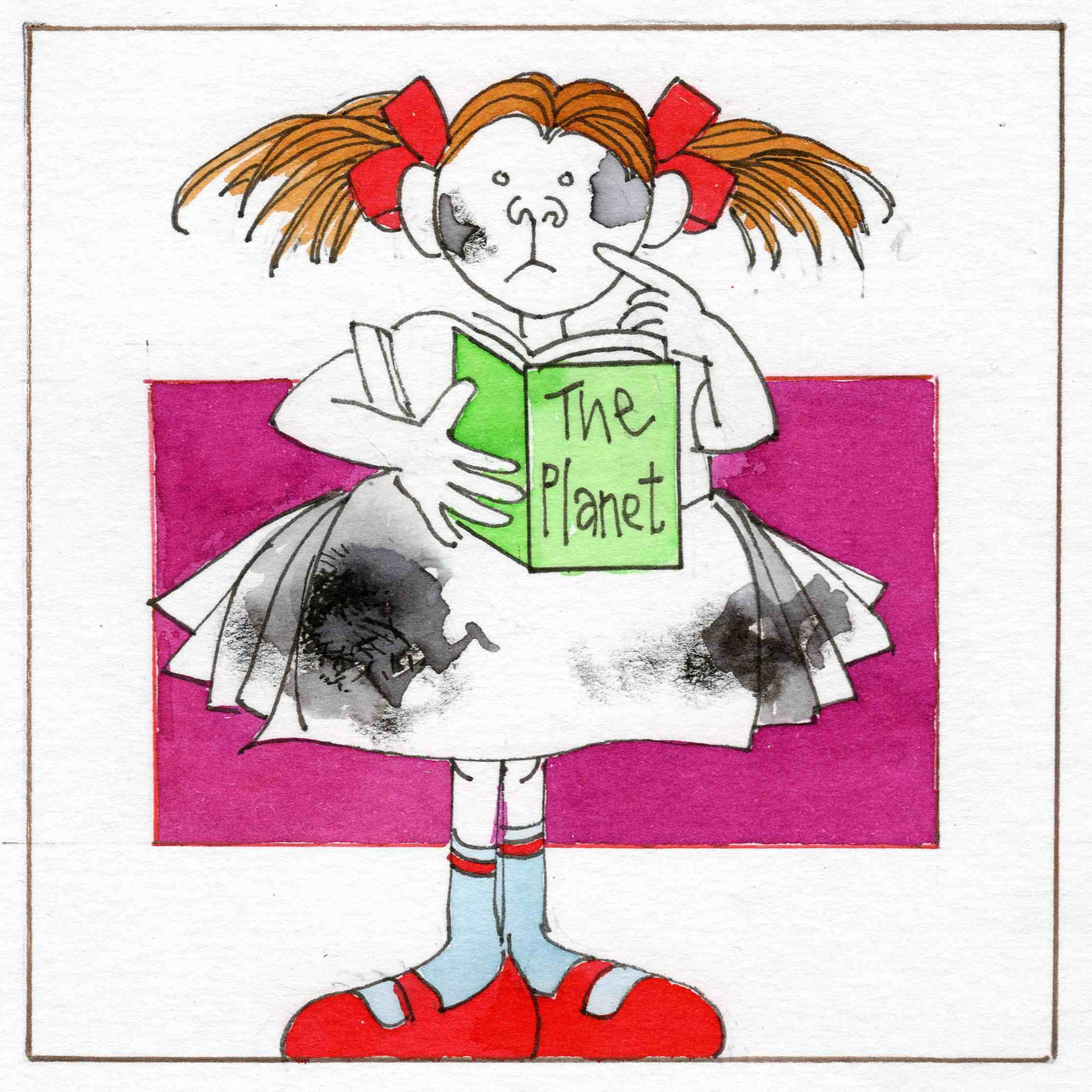
The Dictionaries of the Scots Language (DSL) tell us that broukit means “soiled with soot or streaked with dirt”.
Nineteenth-century examples show that the term was often used to describe children. The Scottish lexicographer John Jamieson recorded the following in 1825: “Eh! Sic a brookit bairn! What has he been blubberin about?”
Then, in 1880, J Young wrote in Modern Scots Poets: “Yon duddie callan on the street, Wi bruckit face an’ blister’t feet, Gangs hirplen here an’ there”.
In The Humours of Glenbruar (1894), James Anderson, writing as Fergus Mackenzie, used the term in the following rebuke: “Jessie, haud your tongue, an’ wash that brookit face”.
The term is now best known because of Hugh MacDiarmid’s poem The Bonnie Broukit Bairn (1925), which contains the lines: “Nane for thee a thochtie sparin, Earth, thou bonnie broukit bairn!”
Interestingly, although the poem’s titular phrase is usually glossed as “beautiful neglected child”, it appears as an example in DSL under the dirt-streaked meaning. Perhaps it was interpreted as an early comment on environmental destruction?
Regardless, the phrase still resonates. In January 2009, The Herald called the Scots language, “the bonnie broukit bairn (the beautiful neglected child) of Scottish culture”. Then, in June 2020, The National asked: “When this blasted virus is under control, can we make things better for ourselves, our entire human race, our beautiful Scotland, our bonnie broukit bairn of a planet?” So, it seems that some modern examples do have the environment in mind after all.
Dictionaries of the Scots Language would like to thank Bob Dewar for illustrating our Scots Word of the Week feature.