Faither
June 20th 2026
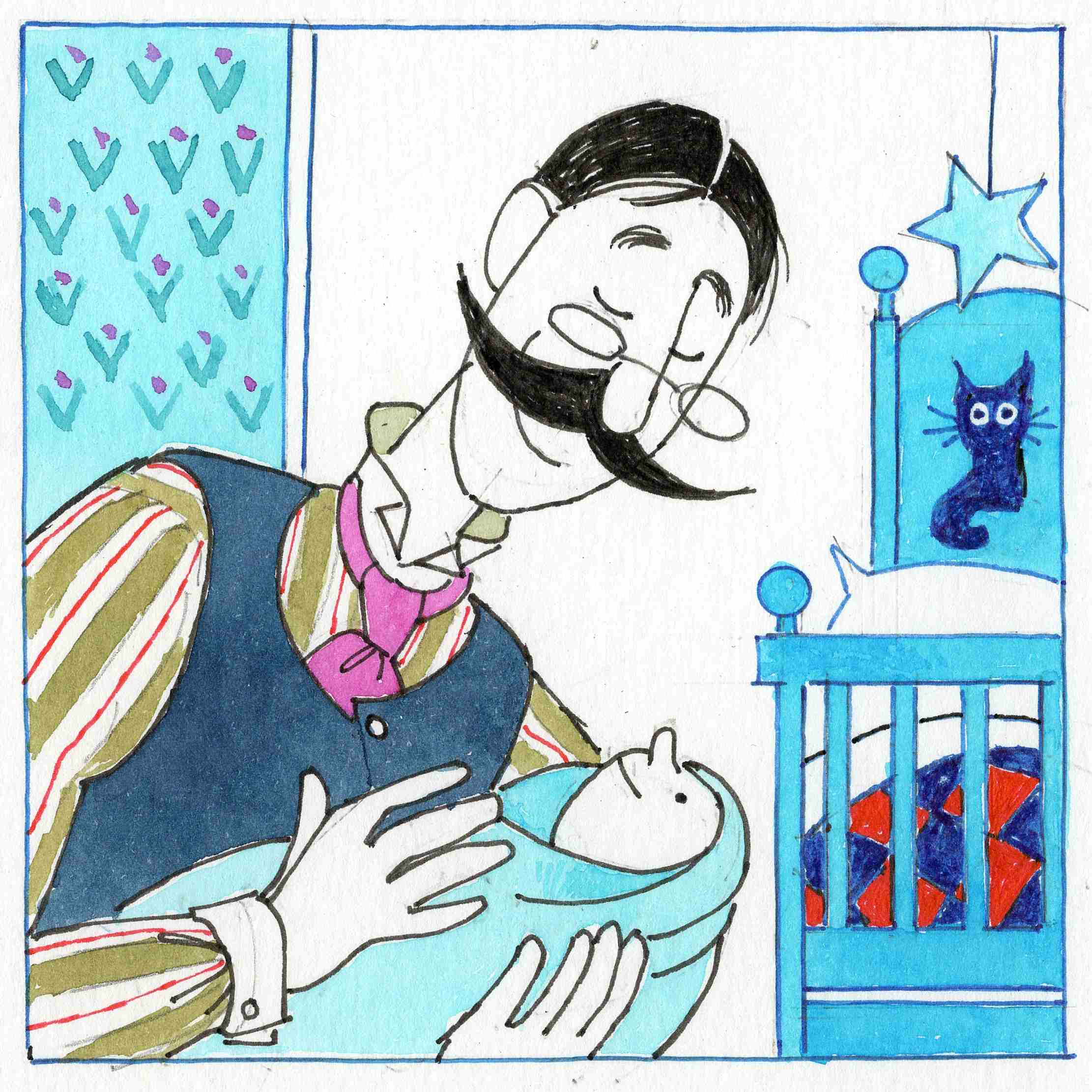
The Dictionaries of the Scots Language (DSL) have carefully documented the varied uses and spellings of faither, which is the Scots equivalent of English father, that have been recorded since 1375.
Many examples show children flouting or following their father’s wishes. In The Diary of Mr John Lamont of Newton, 1649-71 we are told: “He married [Sir] William Balfour’s daughter … without the consent of his feather”. Conversely, the Jacobite lad in Lady Nairne’s song He’s Ower the Hills That I Lo’e Weel (c.1800) has her father’s full approval: “My faither’s gane to fecht for him, My brithers winna bide at hame; My mither greets and prays for them, And deed she thinks they’re no to blame”.
Alexander Anderson’s Cuddle Doon (1879) features a scene that will be familiar to parents everywhere: “The bairnies cuddle doon at nicht’ Wi muckle faught and din. ‘Oh try an’ sleep, ye waukrife rogues, Your faither’s comin’ in’ … At length they hear their faither’s fit An’ as he steeks the door, They turn their faces tae the wa’ An Tam pretends tae snore”.
Another theme in the records is that fathers love to entertain. Timothy Neat included the following in The Summer Walkers (1996): “But he loved to sing … my faither sat for a hale week, every nicht, ootside the door o’ the bothy, till he learned every word …!”. Then, in Colin Burnett’s A Working Class State of Mind (2021) we find: “the yin hing aboot ma faither wis. He wis a right gid storyteller”.
Dictionaries of the Scots Language would like to thank Bob Dewar for illustrating our Scots Word of the Week feature.