Kain
February 21st 2026
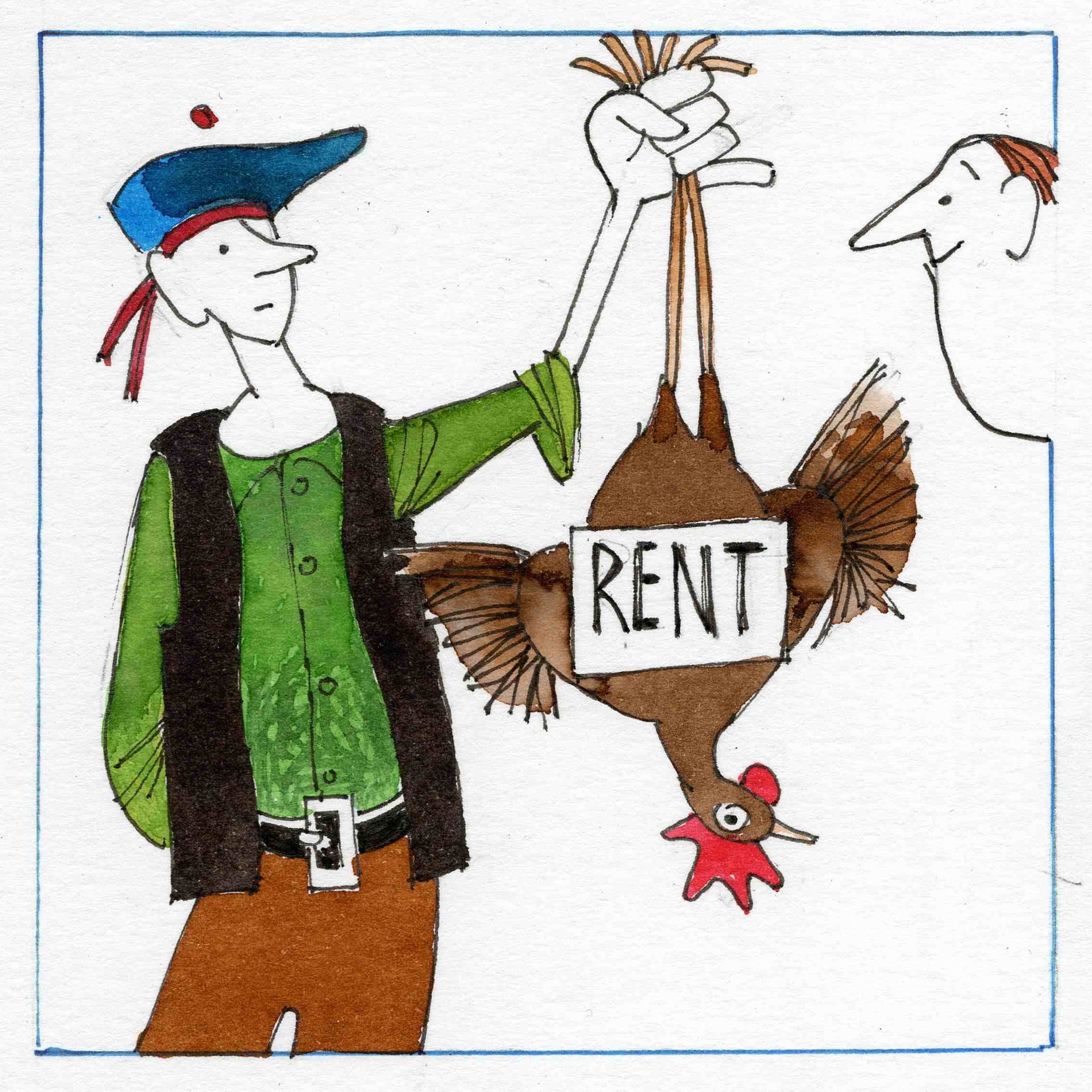
This term is defined in the Dictionaries of the Scots Language (DSL) as, “a payment in kind, especially of poultry, made by a tenant of land as part of his rent”.
The term and practice dates to the sixteenth century and is frequently recorded in administrative documents such as the Decisions of the Lords or Council and Session. The following dates from 1700: “5000 merks for the house and yards and other accommodations, including the kain-hens, carriages and other small casualities”.
A dairy farmer could pay kain with a “quantity of cheese”, becoming a kainer in the process. At first, the quantity probably varied according to the amount produced during a season on an average dairy farm, but it eventually became a fixed weight of 300 stone tron.
In the nineteenth century, Walter Scott writing in his Minstrelsy of the Scottish Border (1802) observed: “I’d paid my kane seven times to hell, Ere you’d been won away!”
The term was still alive in the historical memory during the twentieth century, as seen in William Moffat’s Shetland: The Isles of Nightless Summer (1934): “The Scotch [settlers], who had come into the islands in the train of the Stewarts and other donatories, had introduced kain fowls, forced labour and other exactions dear to their feudalized minds”.
The term is no longer used, and landlords no longer accept livestock or cheese in lieu of cold, hard rent money.
Dictionaries of the Scots Language would like to thank Bob Dewar for illustrating our Scots Word of the Week feature.