Kist
January 24th 2026
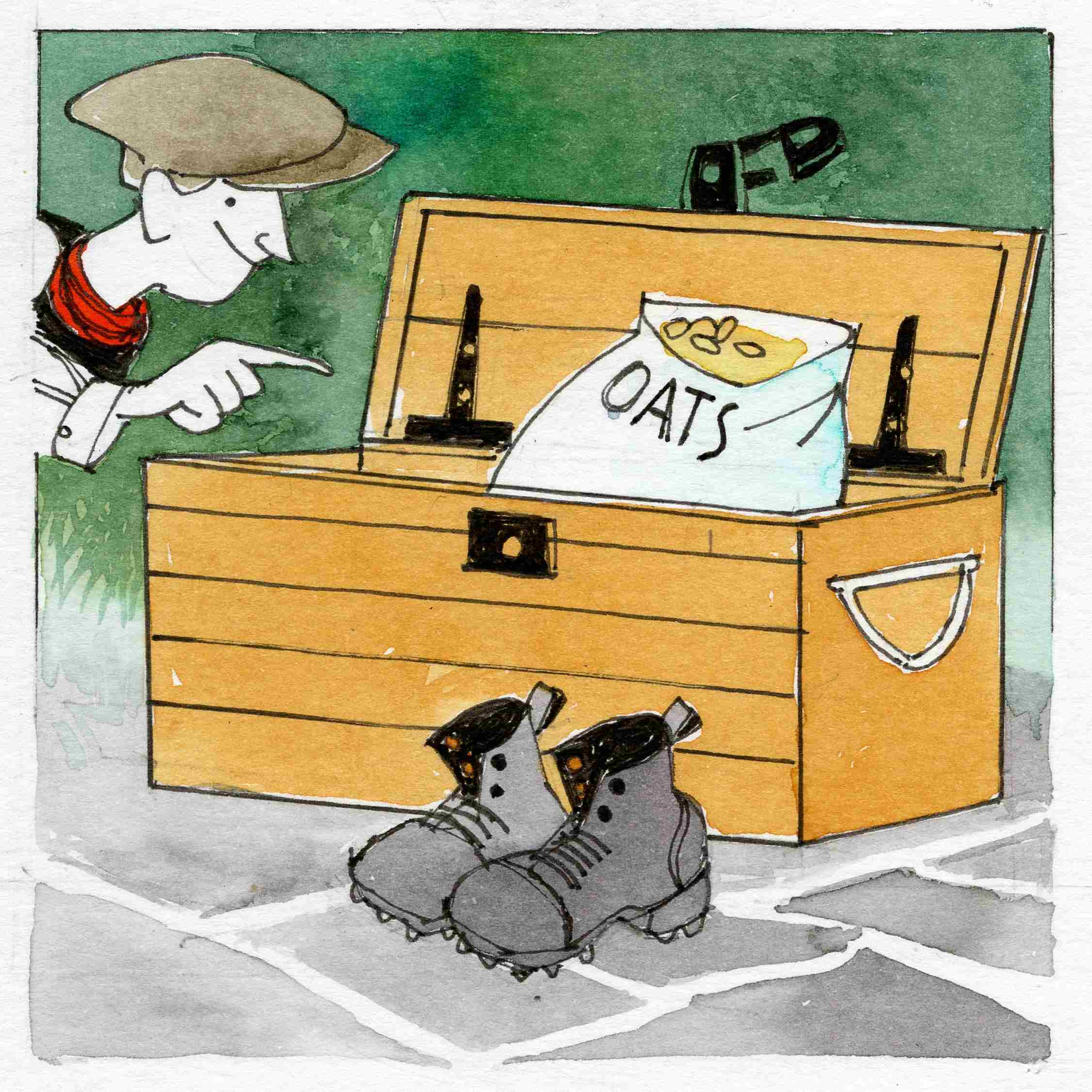
The Dictionaries of the Scots Language (DSL) cover the many senses associated with this term since the fifteenth century. The most familiar being, “a chest, box, trunk, coffer, [or] especially a (farm-)servant’s trunk”.
Various specific uses are covered, including cornkist, “a wooden box or bin in a stable for holding the horses’ corn”. In the mining industry, we are told that a kist could either refer to a “wooden water-tank mounted on wheels” that was used to remove water from mineshafts, or to a box for “holding brushers’ tools underground”.
The term has also been used to mean “the human chest, the thorax”, as seen in W.H.L. Tester’s Poems (1872): “I’ve a cauld in my kist, an’ I’m maist like to dee”. In pre-penicillin days this was no exaggeration from a hypochondriac.
One macabre but long-attested sense is that of a coffin. There are several related terms from the Older Scots period (c.1150-1700), such as buriall kist and mort-kist, as well as the still-used deid-kist. In Proverbs (1721) James Kelly provides the rather bleak reminder that, “All that you’ll get will be a Kist, and a Sheet after all”.
Of course, the term is still widely used in the twenty-first century. Here’s an example from the Independent in January 2018, taken from a piece which argued that Nan Shepherd should be given greater national prominence: “The hail nation o Scotland could turn, through the wark o Shepherd, tae the north-east an fae its deep kist draw forth wirds hauf-forgot in the sooth”.
Dictionaries of the Scots Language would like to thank Bob Dewar for illustrating our Scots Word of the Week feature.