Reive
January 17th 2026
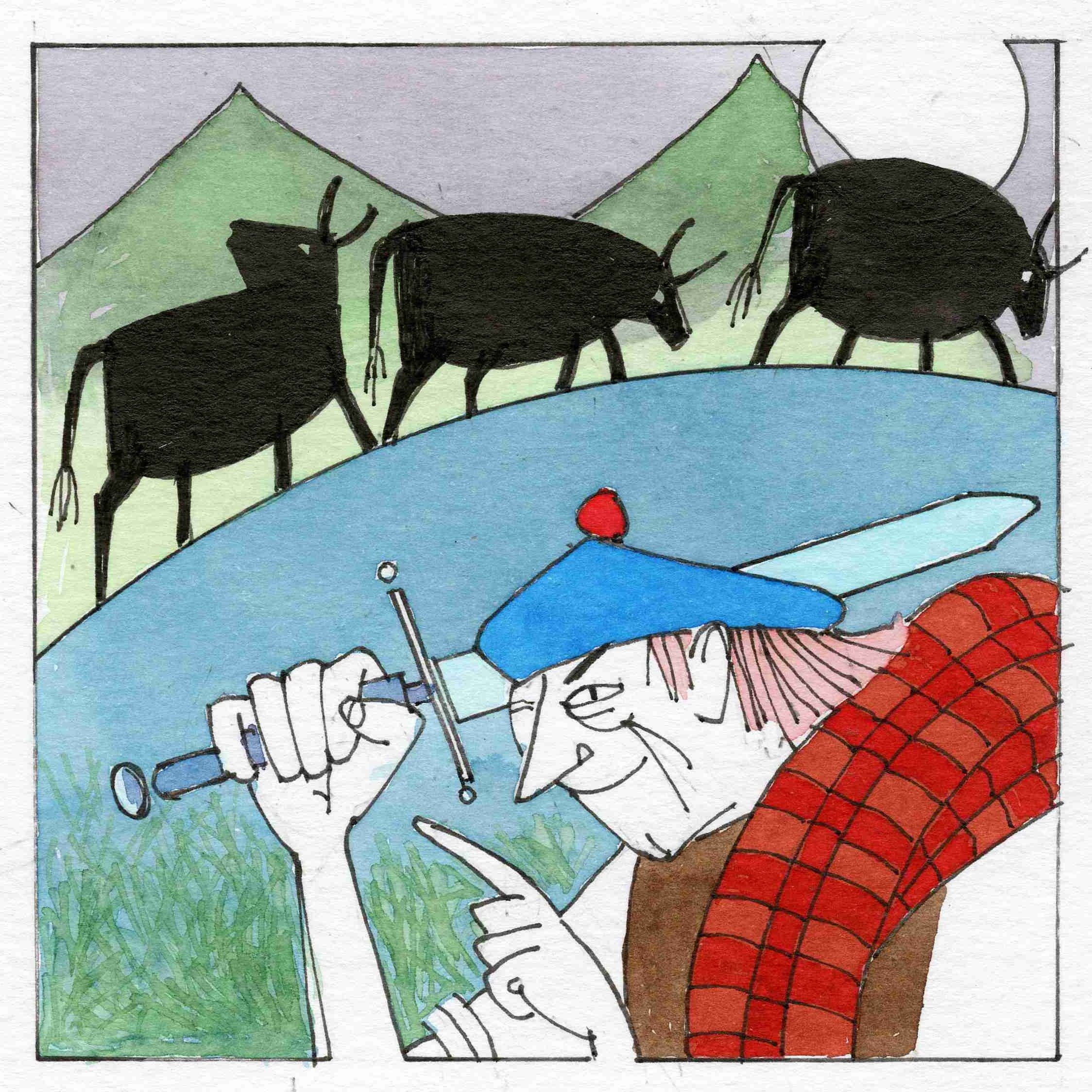
The Dictionaries of the Scots Language (DSL) tell us that to reive is to “rob, plunder, [or] pillage, especially in the course of an armed foray or raid”. Burns employed the term to great effect in The Death and Dying Words of Poor Mailie (1786): “To slink thru slaps [a gap in a wall or fence], an reave an steal”.
From reive we get reiver, a robber or plunderer; once applied to the scourge of the Borders, the term has since lost its edge. There is an annual Reivers Festival in Hawick and a Reiver’s Gin which, according to the Southern Reporter in January 2019, is “made using whin flowers found on the lowland hills … as its main botanical ingredient”.
However, there was a time when reivers were associated with genuine fear. This is evoked within works of historical fiction such as S. R. Crockett’s novel Raiders (1894), which featured, “A set of wild cairds — cattle reivers and murderers”.
Alan Temperley focused on a similar set of subjects within his 1979 collection Tales of Galloway: “Seeking to fill his coffers once more, the laird joined a band of reivers – thieves and border raiders who acknowledged no law. He was as fierce as the best of them, and soon his chests were filled with gold and silver coin, overflowing with rich communion cups and ropes of pearl and other plunder”.
Although the Borders are now a tourist haven, landmarks like the Devil’s Beef Tub remind us that this was once a dangerous place to be.
Dictionaries of the Scots Language would like to thank Bob Dewar for illustrating our Scots Word of the Week feature.