Yellow fin
February 7th 2026
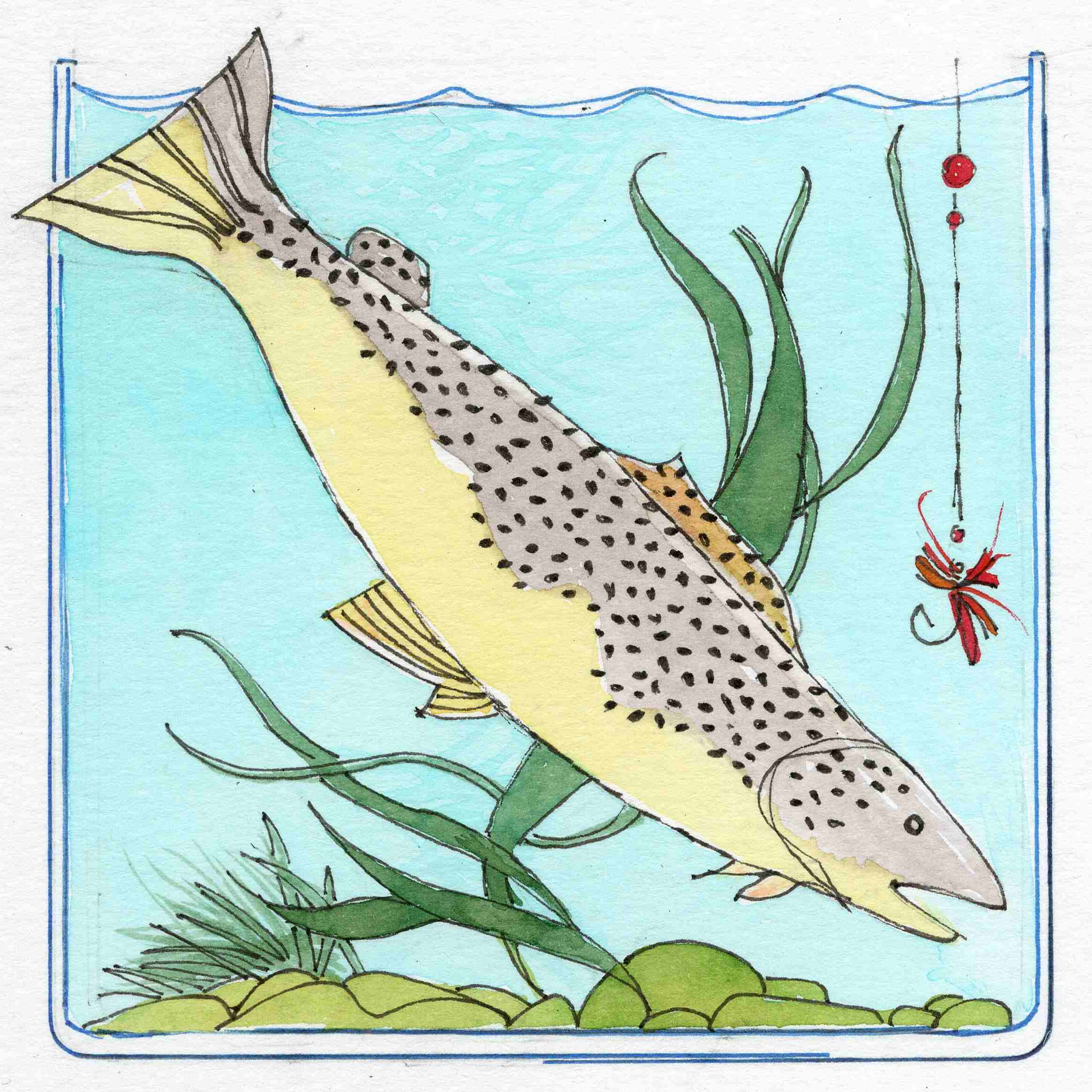
The Dictionaries of the Scots Language (DSL) record this term for “the young of the sea-trout, so called from the colour of its pectoral fin”. The name orange fin is also recorded elsewhere.
An early example comes from James Hogg in the Wool-Gatherer (1818): “At length a yellow-fin rose … I wish your honour had hookit that ane”.
In 1842 we find the following description in the Proceedings of the Berwickshire Naturalists’ Club: “The smelt [of sea- or salmon-trout] having instead of the dark pectoral fin of the salmon smelt, a bright golden tint ornamenting these parts, and which has obtained for it the appellation, among the fishermen of Yellow-fin”.
Research has uncovered several twentieth-century examples. In May 1951, the Dufftown News and Speyside Advertiser reported: “Up-to-date the ‘black tail’ or yellow fin have been scarce in the Fiddich so far, but next month, however, should be the best for these ‘silver-whites’”.
In May 1962, the Aberdeen Evening Express featured a piece on the sea trout that included a reference to its many names: “Yellow Fin, Orange Fin, Black Fin, Black Tail, Tecon, Sprod are one and the same fish, viz. the sea trout smolt. The grilse or what we call finnock locally are called Sewen, Whitling, Cochivie, Mort and Lamasmen in other parts”.
Finally, in August 1967, the same paper explained: “A finnock is, in fact, a young sea trout. While in the smolt stage, it is known as a yellow fin, and they do not go far out to sea before returning as a finnock weighing about ½lb”.
Dictionaries of the Scots Language would like to thank Bob Dewar for illustrating our Scots Word of the Week feature.