Clatty
June 6th 2026
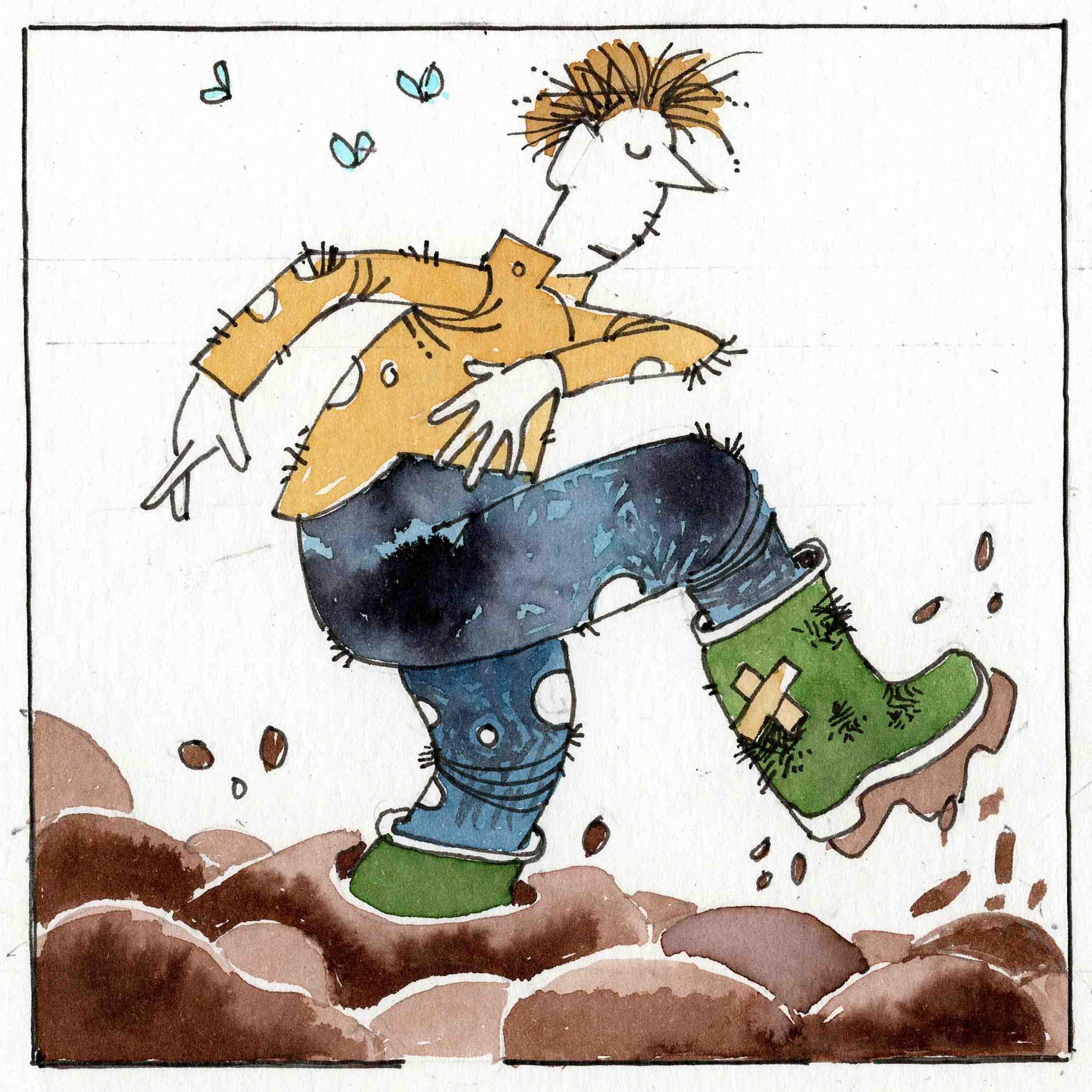
The Dictionaries of the Scots Language (DSL) tell us that this term describes anything “dirty, muddy, slimy [or] disagreeable”. DSL’s first citation comes from Zachary Boyd’s The Last Battell of the Soule in Death (1629): “Fetch my good servant out of his clattie cottage”.
In August 1818, a Scots Magazine piece on the superstitions of Clydesdale recounted the tale of a girl who was trapped by a fairy in a, “frichtsome den, whar naething was to be seen but the cauld clattie sides o’ the cove, shawn by a blue wanyoch [pale] glare”.
Clothes are often singled out as clatty, as we see in J. Ballantyne’s Gaberlunzie’s Wallet (1843): “Your auld knee-breekums, rent and clattie”. We find a good Ulster Scots example in W. F. Marshall’s Verses from Tyrone (1923): “An’ if me shirt’s a clatty shirt, The man to blame’s me da”.
Personal and general hygiene are also key topics. In Stanley Robertson’s Fish Hooses (1990) we find: “Why dae ye nae wash yer neck, cos ye’re awfy clatty?”. Whilst in John Byrne’s Cuttin’ a Rug (1990) we have: “My old mother used to sluice out that clatty house of theirs after she’d done yours and your mammy’s”.
In January 2018, an Englishman writing in Fife Today noted that, despite having lived in Scotland for years, he can still be stumped by Scots terms: “Clatty, bahookie, hoachin, scoobied, scunnered and radge, have all had me perplexed on more than one occasion, and often still catch me out on the odd occasion”.
Dictionaries of the Scots Language would like to thank Bob Dewar for illustrating our Scots Word of the Week feature.