Leckerstane
September 19th 2026
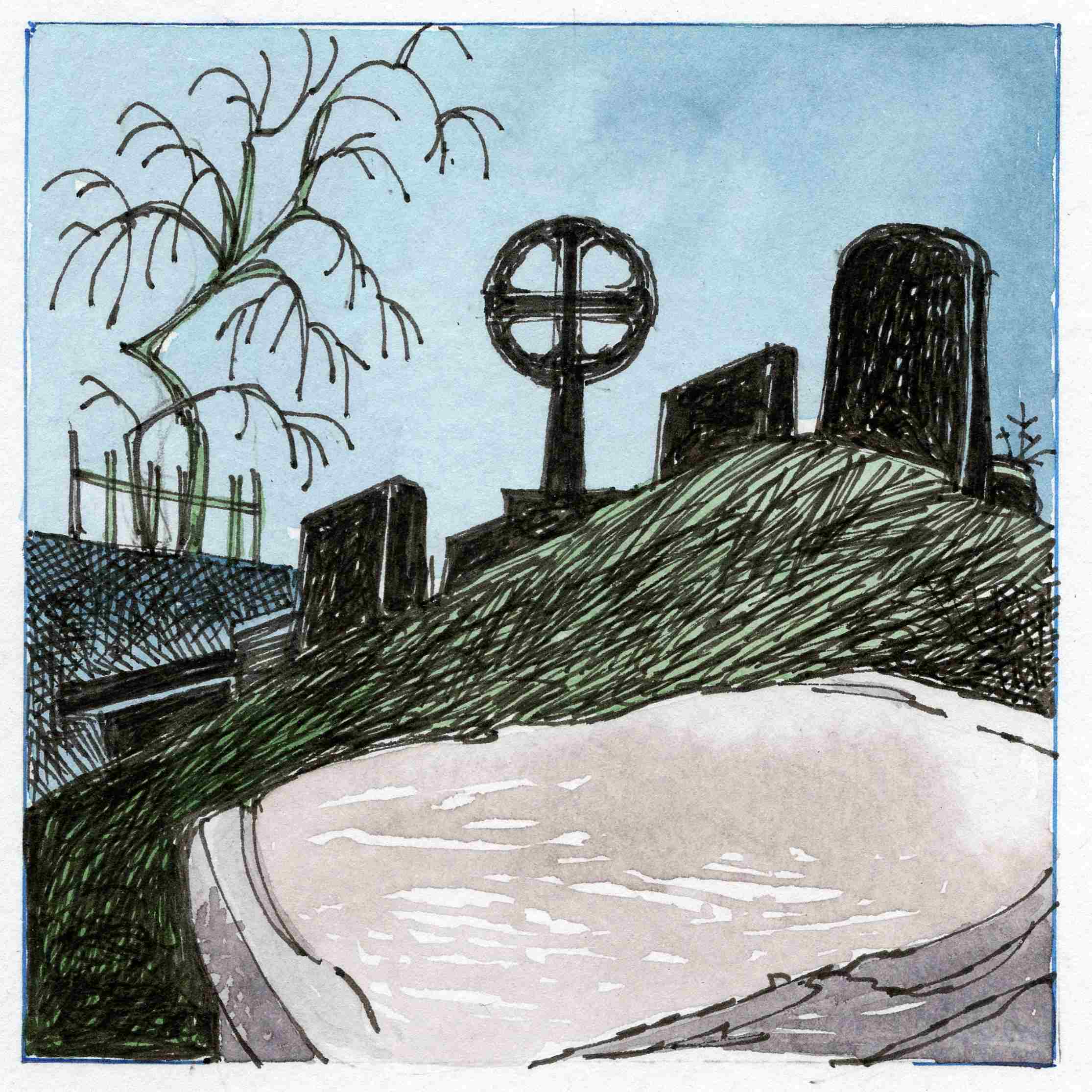
This intriguing term is defined in the Dictionaries of the Scots Language (DSL) as: “A large conspicuous stone of some sort which has given its name to various localities in Kincardine, Angus, Kinross and Fife (Leckerstone, Lickerstanes, Liquorstane) and in Aberdeenshire (Liggarsteen), traditionally a stone on which a coffin was rested on its way to a churchyard”.
The purpose of these stones has long been a source of speculation. The 1795 Statistical Account from Fife offered the following theory: “At no great distance from the church … there are a few stones called the Licker-Stones: Antiquaries have conjectured licker to be a corruption and contraction of lecturer, and … have observed, that formerly, when Bibles were scarce, and the capacity of reading them was confined to a few, the people might assemble at such stones to hear the scriptures read to them”.
Other interpretations connect the stones to the dead. We are told in the 1845 Statistical Account from Aberdeen that, “the Liggar’s Stane … is said to have been put up in its present situation, to mark the spot where the females who followed the soldiers, and who were slain in the battle, were buried”.
Andrew McCormick’s Galloway (1947) references, “the system of having what were known as ‘lecker-stanes’, where the coffin rested”. This is the current most popular interpretation, connecting the first element of the word to Older Scots lik, a corpse. However, whilst likarstane has been attested since the 15th century, this tradition doesn’t seem to have been recorded before 1839.
Dictionaries of the Scots Language would like to thank Bob Dewar for illustrating our Scots Word of the Week feature.